Vândut de libris.ro
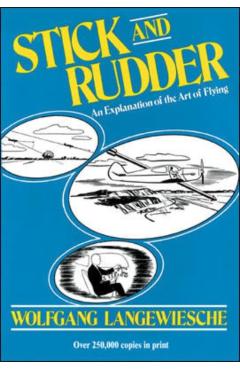
Publishers Note: Products purchased from Third Party sellers are not guaranteed by the publisher for quality, authenticity, or access to any online entitlements included with the product. n n n n n WHATS IN STICK AND RUDDER: n n n n The invisible secret of all heavier-than-air flight: the Angle of Attack. What it is, and why it cant be seen. How lift is made, and what the pilot has to do with it. n Why airplanes stall How do you know youre about to stall? n The landing approach. How the pilots eye functions in judging the approach. n The visual clues by which an experienced pilot unconsciously judges: how you can quickly learn to use them. n The Spot that does not move. This is the first statement of this phenomenon. A foolproof method of making a landing approach across pole lines and trees. n The elevator and the throttle. One controls the speed, the other controls climb and descent. Which is which? n The paradox of the glide. By pointing the nose down less steeply, you descend more steeply. By pointing the nose down more steeply, you can glide further. n Whats the rudder for? The rudder does NOT turn the airplane the way a boats rudder turns the boat. Then what does it do? n How a turn is flown. The role of ailerons, rudder, and elevator in making a turn. n The landing--how its made. The visual clues that tell you where the ground is. n The tail-dragger landing gear and whats tricky about it. This is probably the only analysis of tail-draggers now available to those who want to fly one. n The tricycle landing gear and whats so good about it. A strong advocacy of the tricycle gear written at a time when almost all civil airplanes were taildraggers. n Why the airplane doesnt feel the wind. n Why the airplane usually flies a little sidewise. n Plus: a chapter on Air Accidents by Leighton Collins, founder and editor of AIR FACTS. His analyses of
Preț:
Vânzător: Libris.ro
Brand: Wolfgang Langewiesche